
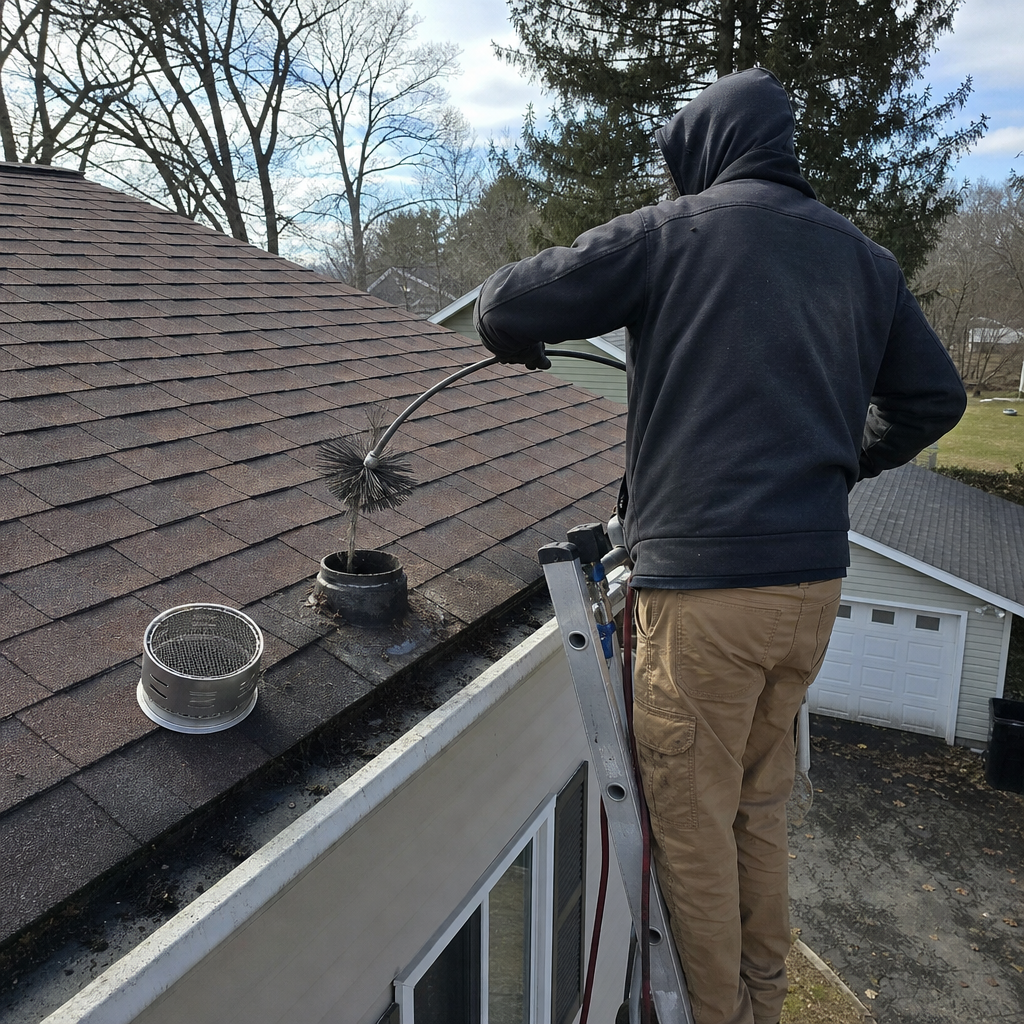
Signs You Need Dryer Vent Cleaning in Worcester, MA — And Why the Standard Checklist Misses the Most Dangerous Ones
The clearest signs you need dryer vent cleaning are clothes taking longer than one cycle to dry, the dryer exterior getting too hot to touch, a burning or musty smell during operation, and visible lint buildup around the exterior vent flap. In Worcester, however, we’ve found dangerous mid-run blockages hiding inside 20-foot horizontal vent paths through triple-decker interior walls that show none of these symptoms until the fire risk is already severe. If you’re noticing any warning signs — or you live in an older retrofitted building where the vent path isn’t visible from end to end — call us at (855) 919-5291 for a free assessment.
The Warning Signs Most Homeowners Recognize
Let’s start with what the standard advice gets right. These symptoms mean your dryer vent needs the best dryer vent cleaning in Worcester, MA, and they show up consistently across the systems we clean in neighborhoods from Main South to Piedmont.
- Extended dry times. A load that used to finish in 45 minutes now needs 70 or a second cycle. This is the most common call we get — and it’s almost always a partially clogged vent restricting airflow.
- Excessive heat on the dryer cabinet or laundry room. When hot, moist air can’t exit through the vent, it backs up into the room. The dryer itself runs hotter than designed, stressing thermostats and heating elements.
- Burning smell during operation. Lint is extremely flammable. When it accumulates near the heating element or in a restricted vent section, you smell it before you see flames. This is an emergency-level symptom.
- Visible lint at the exterior vent flap. If lint is making it all the way to the termination but collecting there, the vent is already congested enough that particles are dropping out of the airstream.
- Flapper that doesn’t open fully or at all. The exterior hood should swing open actively during dryer operation. Weak movement or no movement means insufficient airflow — blockage somewhere upstream.
- Musty odor in clothes after drying. Trapped moisture from poor ventilation breeds mold and mildew in the duct, especially in Worcester’s humid summer months when basement and crawlspace runs already contend with moisture cycling.
These signs are real, and if you’re experiencing any of them, you need Dryer Vent Cleaning in Worcester promptly. But here’s what eleven years of cleaning dryer vents in this city has taught us: by the time these symptoms appear in certain Worcester buildings, the hazard has been developing for years.
The Hidden Danger in Worcester’s Triple-Decker Retrofits
Worcester’s residential core — Grafton Hill, the Grafton Street corridor, the student-rental zones near WPI and Clark — is packed with early-20th-century triple-deckers and two-families built for steam or hot-water radiator heat. When landlords retrofitted laundry facilities and forced-air systems into these buildings over recent decades, dryer vents were routed through whatever path existed: long horizontal runs through interior walls, multiple 90-degree elbows around existing structure, sometimes 20 feet or more with no access points between the dryer and the exterior.
Here’s the critical difference from suburban construction: in a purpose-built home, your dryer vent might be a straight 8-foot shot through an exterior wall. In Worcester’s retrofitted triple-deckers, that same vent can be a 20-foot horizontal run with three elbows, dropping through a floor cavity, turning through a closet, and finally exiting somewhere the original builders never intended.
Lint doesn’t accumulate evenly along these paths. It builds at elbows, at low points where moisture condenses and particles stick, and at transitions between different duct materials. The middle of a long horizontal run can be 70% blocked while both ends — the dryer connection and the exterior flap — show completely normal airflow and appearance.
We’ve pulled out compacted lint deposits the size of a football from mid-run locations where the homeowner reported no symptoms whatsoever. No extended dry times. No burning smell. No hot exterior. The dryer was functioning adequately because enough air was bypassing the blockage — until it wasn’t, and the ignition risk spiked without warning.
The U.S. Fire Administration identifies failure to clean as the leading factor in residential dryer fires, and specifically notes that non-code-compliant duct configurations — excessive length, too many bends, improper materials like flexible foil or plastic — dramatically accelerate lint accumulation. That describes a significant percentage of Worcester’s retrofitted housing stock exactly.
Why DIY Methods Can’t Catch or Clear Mid-Run Blockages
The brush kits sold at hardware stores and the leaf-blower method popular online share a fundamental limitation: they push from one end. A 12-foot flexible brush rod will never reach a blockage 15 feet into a run with multiple direction changes. A leaf blower simply compresses the lint against the first significant obstruction, potentially creating a worse blockage or damaging duct connections inside the wall.
Our Nikro dryer vent cleaning system is built for this exact problem. The rotary brush and high-velocity vacuum combination reaches through extended runs, and we verify clearance with camera inspection — not guesswork. We can identify where the blockage sits, how severe it is, and whether your vent routing itself is creating a recurring hazard independent of cleaning frequency.
David Martinez, our owner and lead technician, has cleared thousands of these Worcester systems personally. He knows the typical routing patterns in Grafton Hill triple-deckers versus Piedmont two-families versus the converted attics near Clark. That local pattern recognition means faster diagnosis and more thorough cleaning than a technician seeing your building type for the first time.
Common Local Scenarios We Encounter
These are real situations from jobs across Worcester — not hypotheticals. If any sound familiar, your vent needs professional inspection regardless of whether you’ve noticed standard warning signs.
The “functioning” dryer in a student rental. Near WPI, we regularly find 30–40-year-old duct systems with zero documented cleaning history. In one Main South triple-decker, the vent ran 22 feet horizontally through a second-floor ceiling cavity, dropped through a closet, and exited through a first-floor wall. The lint blockage at the elbow where it dropped was so compacted we had to section the duct to remove it. The landlord had no complaints from tenants — the dryer “worked fine.”
The recent homebuyer with an inherited system. A couple in Piedmont bought a 1920s colonial with a finished basement and a laundry area added in the 1980s. The dryer vent ran through a soffit, across the basement ceiling, and up an exterior wall — four elbows, 18 feet total. During our cleaning, we found the mid-run section partially collapsed from a previous homeowner’s foot traffic in the joist bay, creating a lint trap that had been accumulating for a decade. No standard symptom checklist would have caught this.
The conscientious homeowner who cleaned the wrong end. A Grafton Hill resident regularly vacuumed her exterior vent flap and replaced the transition hose behind her dryer annually — exactly what the standard advice recommends. But the 16-foot run through her interior wall had never been professionally cleaned. When we camera-inspected, we found a dense lint mat at the third elbow, 12 feet in. She was doing everything right by the conventional guidance and still sitting on a fire hazard.
The property manager facing insurance scrutiny. After a dryer fire in a Worcester two-family, the insurance investigator requested maintenance records. The landlord had none. A documented annual professional cleaning — with dated invoice and technician notes — would have provided defensible evidence of due diligence. We now service several Worcester landlords specifically for this documentation purpose; they understand that “I told tenants to clean the lint trap” doesn’t satisfy an adjuster or a code inspector.
What Professional Dryer Vent Cleaning Includes — and Costs
We don’t believe in vague pricing or mystery charges. Here’s what our Dryer Vent Cleaning service includes and what Worcester homeowners typically pay:
| Service Component | What’s Included | Typical Range in Worcester |
|---|---|---|
| Standard dryer vent cleaning (straight to moderate run, 1-2 elbows) | Rotary brush cleaning from both ends, vacuum extraction, airflow test, exterior hood inspection | $150 – $225 |
| Complex vent cleaning (extended horizontal run, 3+ elbows, interior wall routing) | Nikro rotary system with camera inspection, mid-run access if needed, blockage removal, routing assessment | $225 – $350 |
| Vent repair or rerouting recommendation | Written assessment of code compliance, hazard documentation for insurance, quote for correction if needed | Included with service; repair quoted separately |
These ranges reflect actual Worcester dryer vent cleaning costs for owner-operator professional service with commercial-grade equipment — not a coupon-mailer shop-vac job that leaves the mid-run blockage intact. Every cleaning includes before-and-after airflow measurement so you know the difference we made, not just the time we spent.
When to Schedule — Even Without Symptoms
Our recommendation for Worcester properties: if your dryer vent runs more than 12 feet, has more than two elbows, passes through any interior wall or floor cavity, or serves a rental unit where you can’t verify tenant maintenance, schedule professional inspection annually regardless of symptoms. The buildings most at risk are the ones where standard warning signs fail first.
For straight, short, visible vent runs in newer construction, every 18-24 months may suffice — though Worcester’s extended heating season and higher cumulative system runtime still push toward the more frequent end of that range.
If I wouldn’t let it sit in my own house, I’m not leaving it in yours.
FAQs
Affordable dryer vent cleaning in Worcester, MA typically ranges from $150 to $350 depending on vent length, elbow count, and whether the run passes through interior walls where mid-run blockages can hide. Straight exterior-wall vents fall at the lower end; complex triple-decker retrofits with horizontal runs require more time and specialized equipment. Call (855) 919-5291 for a free estimate — we’ll ask about your vent routing and give you a firm quote before scheduling.
Yes — normal drying times do not guarantee a safe vent, especially in Worcester’s retrofitted triple-deckers where lint can accumulate in the middle of long horizontal runs while both ends maintain adequate airflow. The U.S. Fire Administration reports that failure to clean dryer vents is the leading cause of residential dryer fires, and non-code-compliant duct routing — excessive length, too many bends — accelerates dangerous buildup without producing obvious symptoms. If your vent path isn’t fully visible and accessible, professional camera inspection is the only way to verify safety.
DIY brush kits cost $20–$40 but cannot reach or clear mid-run blockages in extended or elbow-heavy vent configurations common in Worcester’s older housing stock — and aggressive DIY methods can damage duct connections inside walls or compress lint into worse blockages. Professional cleaning with rotary brush systems and camera verification runs $150–$350 but actually removes the hazard and provides documentation for insurance or code compliance. For most Worcester properties with retrofitted laundry systems, professional service is the genuinely cost-effective choice when fire risk and hidden blockage potential are factored in. Call (855) 919-5291 to discuss your specific vent configuration.
Annual professional cleaning is recommended for any Worcester property with extended vent runs, multiple elbows, or rental occupancy; every 18–24 months may suffice for straight, short, visible vents in newer construction. Worcester’s inland elevation produces a heating season several weeks longer than coastal Massachusetts cities, and annual snowfall exceeding 60 inches means dryers run more cumulative hours per year — driving faster lint accumulation and more moisture stress on duct systems, particularly in basement and crawlspace runs. If your building dates to the early 20th century with retrofitted laundry facilities, annual inspection is the safer standard regardless of apparent performance.
Ready to Know What’s Actually in Your Vent?
If you’d rather have it looked at than wonder, Liberty Bell Air Duct Cleaning Worcester offers no-pressure assessments throughout Worcester — from Grafton Hill to Piedmont to the WPI rental corridor. David Martinez, our owner and lead technician, handles the work personally with Rotobrush and Nikro equipment, camera verification, and eleven years of pattern recognition in this city’s specific building stock. Call (855) 919-5291 for a free estimate.
Written by David Martinez, Owner & Lead Technician at Liberty Bell Air Duct Cleaning Worcester, serving Worcester, MA.